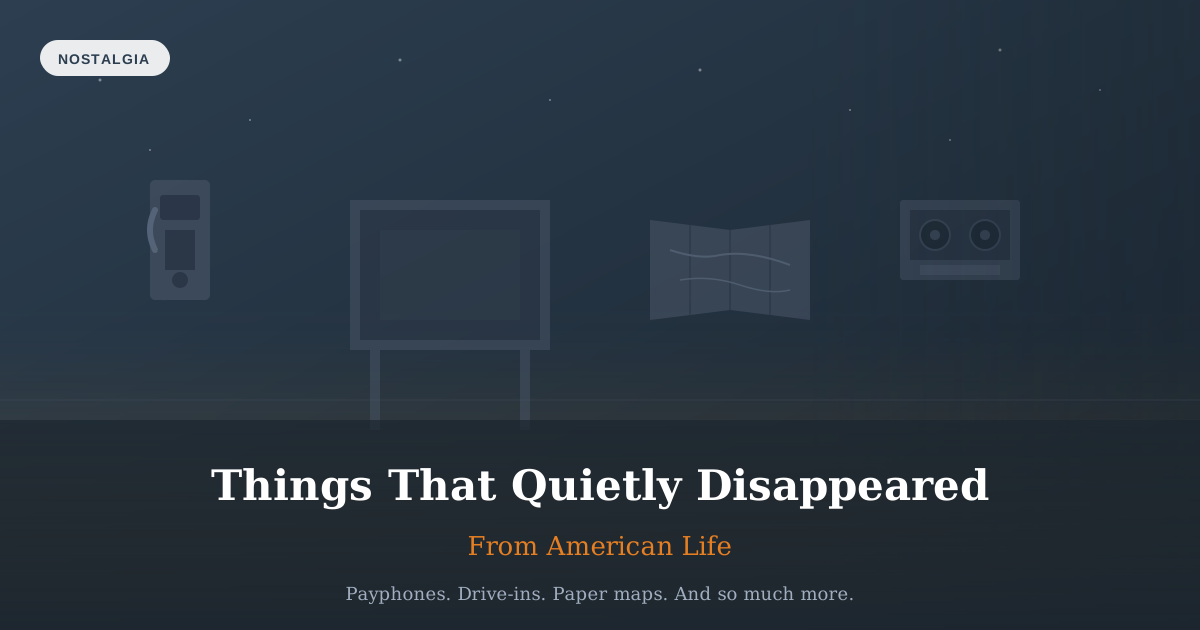
Things That Quietly Disappeared From American Life
Payphones, drive-ins, paper maps, and more. A look back at the everyday things that slowly vanished from our lives without us really noticing until they were gone.
They Didn't Leave All at Once
Nobody announced when the last payphone in your town stopped working. There was no ceremony when the video store closed its doors for good. The drive-in didn't send out farewell cards.
These things just quietly slipped away while we were busy living our lives. And one day we looked up and realized they were gone.
The Payphone on the Corner
There used to be one outside the Texaco station on Route 9. I can still feel the weight of that receiver, the cold metal cord, the way you had to really push those silver buttons to make them work.
My dad kept a dime in his glove compartment specifically for emergencies. "If you ever get stranded," he'd say, "find a payphone and call home."
I tried explaining this to my daughter last year. She asked why you couldn't just use your phone. I told her we didn't have phones in our pockets back then. She looked at me like I'd said we used to ride dinosaurs to school.
The last time I saw a working payphone was maybe 2008. It was in an airport, tucked in a corner like it was embarrassed to still exist. Nobody was using it.
Drive-In Theaters
Friday nights in the summer meant the Starlight Drive-In on Highway 41. My parents would load us into the station wagon around seven, and we'd stop at the grocery store for contraband snacks because the concession stand prices were highway robbery.
We'd park facing the big white screen, hook that heavy metal speaker onto our half-rolled window, and wait for the sky to go dark.
The first feature was always something for the grown-ups. My sister and I would fall asleep on the blankets in the back during the second movie. Dad would carry us inside when we got home, still half-dreaming of whatever we'd been watching.
There were over 4,000 drive-ins across America in 1958. Now there are maybe 300 left. Most of them turned into shopping centers or housing developments. The Starlight became a Walmart.
Paper Maps
My father's glove compartment was stuffed with them. Texaco maps. Rand McNally atlases. AAA TripTiks with the highlighted routes.
Road trips meant my mom in the passenger seat, map unfolded across her lap like a giant paper puzzle, squinting at the tiny print. "Take the next exit. No wait, the one after that. Actually, turn around."
We got lost constantly. Gloriously, memorably lost. That's how we found the best diners, the weird roadside attractions, the shortcuts that weren't really shortcuts but became family legends anyway.
GPS killed all of that. I'm not saying GPS is bad. It's incredible, actually. But something was lost when we stopped having to figure it out ourselves.
Video Rental Stores
The Blockbuster on Main Street was a Friday night ritual. You'd walk through those doors and the whole weekend opened up in front of you.
New releases on the back wall. Five-day rentals in the middle. That weird foreign film section nobody ever went to. The little curtained area in the corner that made us kids giggle.
Choosing a movie took forever. You'd pick up a box, read the back, put it down, pick up another. The pressure of choosing wrong was real. You were stuck with that movie until Monday.
The last Blockbuster closed in 2010. Well, almost the last one. There's still one in Bend, Oregon. People fly there just to take pictures with it like it's a historical landmark.
I guess it is now.
The TV Guide
It came in the mail every week, and it mattered. My grandmother would circle her shows with a red pen so she wouldn't forget. Dallas on Friday. 60 Minutes on Sunday. The TV Guide was her social calendar.
Flipping through those pages was how you discovered what was on. No scrolling through an endless menu. No algorithm suggesting things based on what you watched before. Just pages and pages of possibilities.
The little descriptions were an art form. "A mysterious stranger arrives in town" could mean anything. You had to tune in to find out.
Handwritten Letters
My grandmother wrote letters every Sunday after church. She had special stationery with little flowers in the corner and a pen that she'd had since 1962. Her handwriting was beautiful, all loops and curves.
She'd tell us about the weather, the garden, what she made for dinner. Nothing important, really. Everything important, actually.
I have a shoebox of her letters in my closet. Sometimes I take them out just to see her handwriting again. You can't do that with a text message.
The Milkman
He came three times a week. Left the bottles in the metal box by the back door. My mom would put the empties out the night before.
I don't even remember when the milkman stopped coming. That's how these things work. They fade so gradually you don't notice until years later when someone mentions it and you think, wait, when did that end?
What We Lost
It's not really about the things themselves. Payphones were inconvenient. Paper maps were frustrating. Drive-ins had bad sound and mosquitoes.
It's about the pace of life they represented. The patience they required. The way they forced us to be present in a moment instead of rushing through it.
My daughter will never know the feeling of being unreachable. She'll never experience the particular magic of a drive-in under the stars. She'll never get a letter from her grandmother written in careful cursive on flower-edged paper.
The world she's growing up in has its own magic. I know that. FaceTime with grandparents across the country. Movies instantly available. Maps that talk to you and never get you lost.
But sometimes I miss being lost.
Sometimes I miss the weight of a payphone receiver and the satisfying click of hanging up.
Sometimes I miss the things that disappeared so quietly we didn't even get to say goodbye.
More from Nostalgia
80s Malls vs Today's Malls: What We Lost Along the Way
From neon lights and food courts packed with families to half-empty corridors and closing anchor stores. A deep look at how American mall culture transformed—and what disappeared when it did.
Life Before WiFi: When Kids Played Outside Until the Streetlights Came On
Remember when summer meant disappearing after breakfast and coming home when the streetlights flickered on? A look back at childhood before screens took over and how technology changed the way kids play forever.
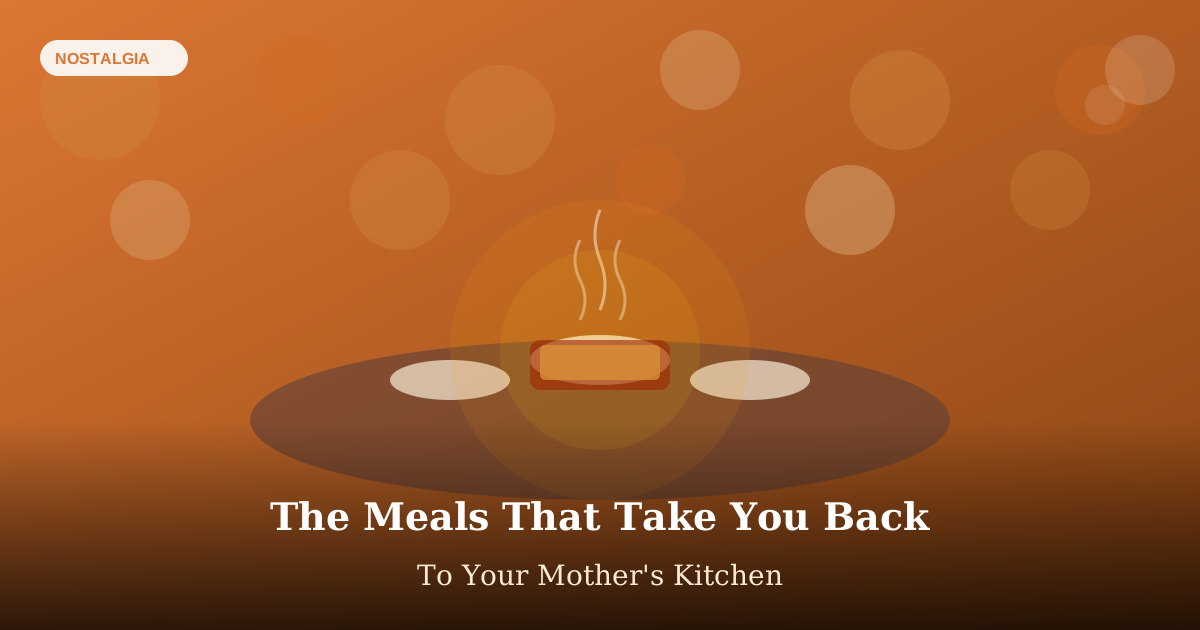
The Meals That Take You Straight Back to Your Mother's Kitchen
Meatloaf with ketchup on top. Tuna casserole on Fridays. The smell of Hamburger Helper coming through the screen door. These are the meals that raised us.