When the Bell Rang and Someone Actually Came Out to Help You
Before self-checkout and DIY apps, there was a time when you pulled into a gas station and a bell rang. And someone came out to help. Remember that?
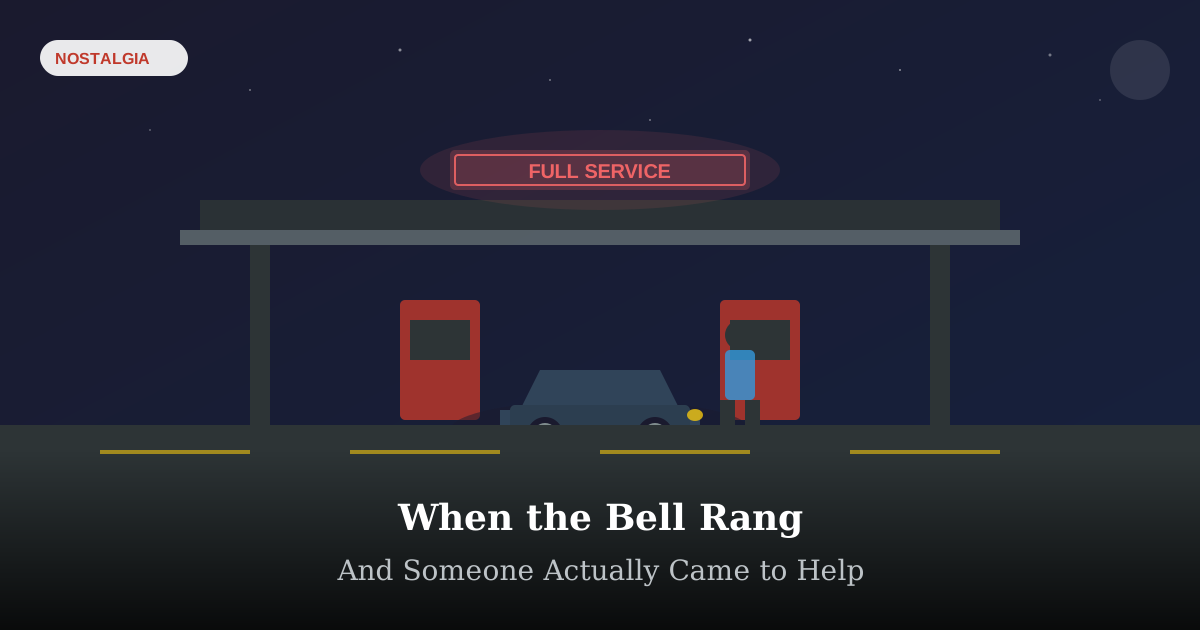
The Sound That Started Everything
You'd pull in off the road, tires rolling over that black rubber hose, and then you'd hear it. That bell. Two quick dings echoing across the lot.
Before your engine even stopped, a man in a uniform was already walking toward your car. Not running, not rushing. Just walking with purpose, a rag tucked in his back pocket, ready to work.
He didn't ask if you needed help. He just helped. That's how it worked back then.
I haven't heard that bell in thirty years, but I can still hear it perfectly.
The Full-Service Experience
My father drove a 1972 Ford LTD, green with a tan vinyl roof. I remember sitting in the back seat, window rolled down, watching the whole ritual unfold like it was a performance.
The attendant would appear at the driver's window. "Fill 'er up?" he'd ask, and my father would nod. Regular. Maybe check the oil if we were heading somewhere far.
Then the dance would begin.
He'd walk to the back of the car, unscrew the gas cap, and slide the nozzle in. While the tank filled, he'd pop the hood—that heavy clunk of metal on metal—and pull out the dipstick. Wipe it clean. Check it again. Sometimes he'd top off the oil right there from a can he kept on a shelf.
Next came the windshield. He'd grab the squeegee from the bucket, soap one side, flip it, and wipe the glass clean in long confident strokes. Front and back. Sometimes the side mirrors too, if he had time.
All of this happened while my father sat in the car. Hands on the wheel. Engine off. Just waiting.
That's what service meant.
The Smell of a Different Era
If you're old enough to remember full-service stations, you remember the smell.
Leaded gasoline had a sweetness to it. Not pleasant exactly, but distinct. It mixed with the hot asphalt and the faint whiff of motor oil, and together they created something that smelled like summer road trips and Saturday errands and being a kid in the backseat with nowhere else to be.
They took the lead out of gasoline in the mid-eighties. Probably for the best. But that smell disappeared with it, and a whole generation of memories got a little harder to reach.
I caught a whiff of something similar at an old garage last year. Just for a second. And I was seven years old again, watching a stranger check my father's oil like it was the most natural thing in the world.
The Men Who Worked the Pumps
They wore uniforms back then. Not costumes, not branded polo shirts. Real uniforms.
A button-down work shirt, usually gray or blue, with their name stitched over the pocket. Earl. Jimmy. Frank. Pants that matched. Steel-toed boots that had seen better days. A cap, sometimes, with the station's logo faded from years of sun.
These weren't teenagers killing time before college. These were grown men, often supporting families, doing honest work with their hands.
They knew cars. Not from YouTube videos or online forums. They knew them because they'd spent years under hoods, replacing belts and topping off fluids and diagnosing problems by sound alone.
My father trusted his gas station attendant more than he trusted most mechanics. That man saw our car every week. He knew when something sounded off.
We don't have those relationships anymore.
More Than Just Gas
The full-service station was a small-town institution. It was where news traveled. Where men gathered on Saturday mornings to talk about the weather, the game, the job that was hiring two towns over.
There were vending machines with glass bottles of Coca-Cola. A rack of maps you could take for free. A bathroom key attached to a wooden paddle so big you couldn't accidentally pocket it.
Some stations had little repair bays attached. You could get your tires rotated while you waited, or have them patch a slow leak for a few dollars. The owner would come out wiping his hands on a rag and tell you straight what was wrong and what it would cost to fix.
No upsells. No service packages. Just honesty from a man who'd probably be there next week and the week after that.
That kind of trust was built over years. And it disappeared almost overnight.
When Self-Service Arrived
I remember the first time I saw a self-service pump. It must have been the early eighties. A new station opened on the highway, shiny and modern, with a big sign that said "Self-Serve" and a price a few cents cheaper per gallon.
My father wouldn't use it. Not at first. He said it felt wrong, pumping your own gas like you worked there. He'd drive the extra mile to the old Texaco where Charlie still came out when the bell rang.
But the prices kept dropping at the self-serve places. And the full-service stations kept closing. One by one, like lights going out on a street.
By 1990, finding a full-service pump was like finding a pay phone that worked. They existed, but you had to look.
My father eventually gave in. We all did.
What We Traded Away
The self-service revolution was sold to us as freedom. Pump your own gas. Bag your own groceries. Check yourself out. Scan your own boarding pass. Do it yourself and save a few cents.
But here's what nobody mentioned: we weren't just saving money. We were trading away something harder to measure.
We traded the attendant who knew your name for a screen that doesn't. We traded the mechanic who could hear a problem for an app that shows you a warning light. We traded human beings who took pride in service for algorithms that optimize efficiency.
And somewhere along the way, customer service stopped being standard and became a premium feature.
Now you pay extra for someone to help you. Curbside pickup. Concierge service. White-glove delivery. These are the things that used to just happen.
The Last Full-Service Station I Saw
There's still one near my mother's house in New Jersey. That's the thing about Jersey—they never let go of full service. State law requires it, one of the last places in America that does.
I stopped there last Thanksgiving on my way to see family. Pulled up to the pump and waited, not sure what to do with myself. A young man walked over, maybe nineteen or twenty.
"Fill it up?" he asked.
I nodded. And then I watched him do exactly what that attendant did for my father fifty years ago. Check the gas cap. Start the pump. Walk around to the front. Pop the hood without asking.
He checked my oil. Topped off my washer fluid. Cleaned my windshield with the same squeegee motion I'd seen a hundred times as a kid.
When he was done, I handed him cash and told him to keep the change. He looked surprised, like nobody did that anymore.
Maybe nobody does.
The First Car You Took to a Full-Service Pump
I've been thinking about this question all week. What was the first car you ever took to a full-service station?
For me, it was my mother's 1978 Chevy Impala. Baby blue. Bench seats in the front. An eight-track player that only worked half the time.
I was sixteen, just got my license, and she sent me to fill up the tank. I pulled into the Sunoco on Main Street like I'd watched my father do a hundred times. The bell rang. The attendant walked over.
"Fill 'er up?" he asked.
I nodded, trying to look like I belonged there. Like I was a real driver and not just a kid borrowing his mother's car.
He filled the tank. Checked the oil without me asking. Cleaned the windshield. When he told me the total, I handed him a twenty and waited for change.
I drove home feeling like I'd passed some kind of test. Like I'd joined a club that my father belonged to, and his father before him.
That station closed in 1994. The lot's a Walgreens now.
What We Really Lost
It wasn't about the gas. It was never about the gas.
It was about being seen. Being helped. Having someone take thirty seconds out of their day to make yours a little easier, not because you paid extra, but because that's what people did.
My father never pumped his own gas until he was sixty years old. He grew up in a world where service was part of the deal. Where businesses competed not just on price, but on how well they treated you.
That world is mostly gone now. We've traded it for convenience and cost savings and apps that let us do everything ourselves.
But sometimes, late at night, I think about that bell. Two quick dings. The sound of someone coming to help.
And I wonder what else we let disappear when we decided we didn't need that anymore.
More from Nostalgia

80s Malls vs Today's Malls: What We Lost Along the Way
From neon lights and food courts packed with families to half-empty corridors and closing anchor stores. A deep look at how American mall culture transformed—and what disappeared when it did.
Life Before WiFi: When Kids Played Outside Until the Streetlights Came On
Remember when summer meant disappearing after breakfast and coming home when the streetlights flickered on? A look back at childhood before screens took over and how technology changed the way kids play forever.
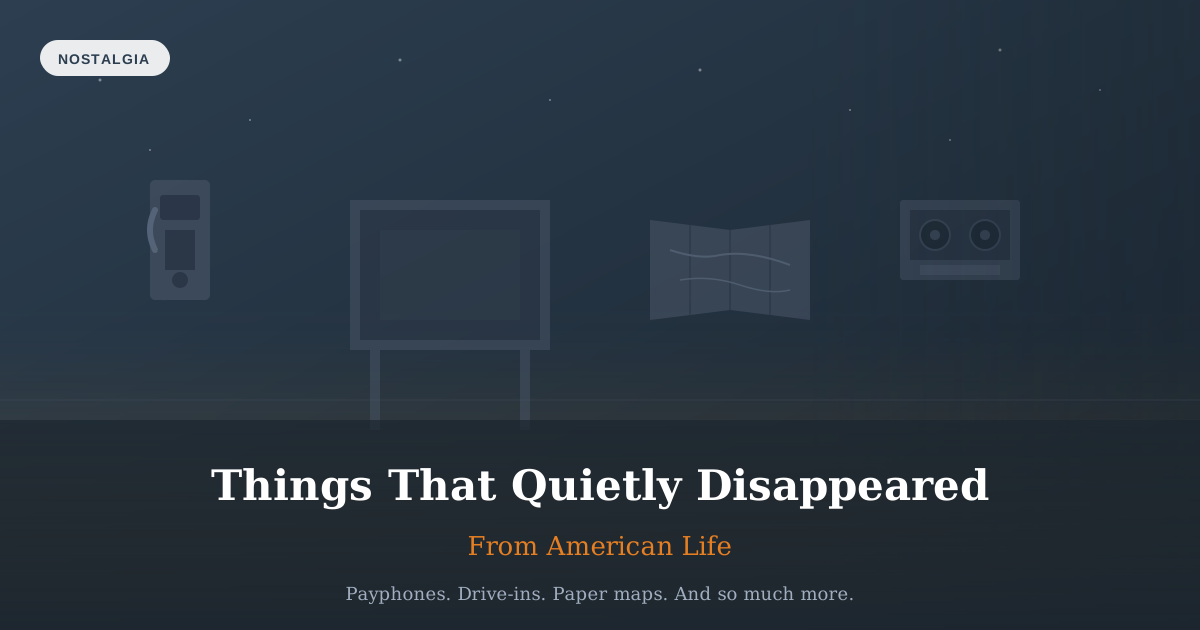
Things That Quietly Disappeared From American Life
Payphones, drive-ins, paper maps, and more. A look back at the everyday things that slowly vanished from our lives without us really noticing until they were gone.