She Played One Song for Leftovers. The Groom Couldn't Stop Crying.
A wedding, a harp, and the woman nobody noticed — until she started to play.
12 min read, published
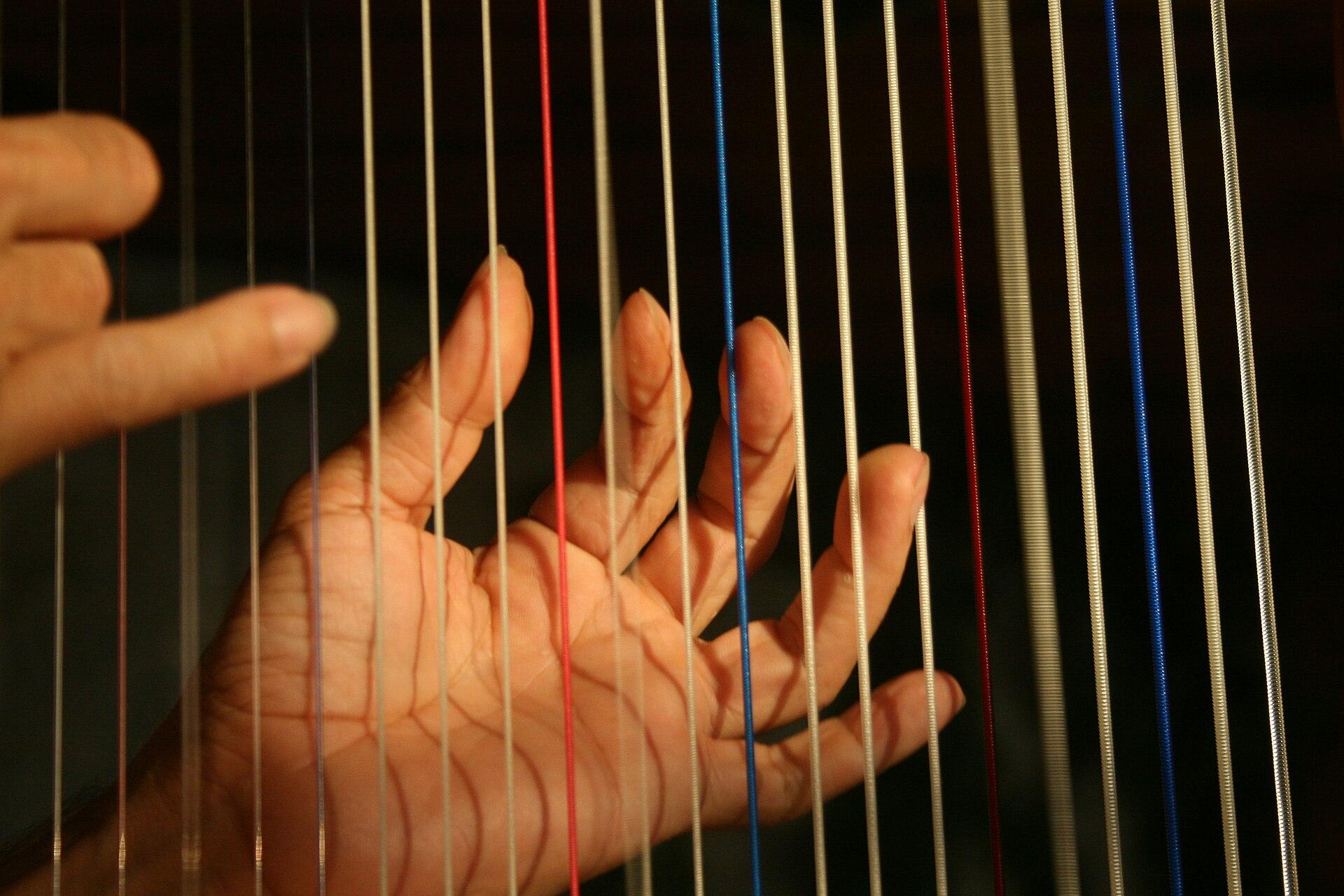
The Woman Nobody Noticed
Nobody noticed her at first.
She came in through the side door while the caterers were carrying trays of champagne and the DJ was setting up his speakers. She moved quietly, the way people learn to move when they've spent years trying not to be seen.
Her green army jacket was too big for her. Her boots were cracked at the soles. Her grey hair fell in tangled waves past her shoulders, and she smelled like rain and bus exhaust and something sweet underneath it all — like she'd been standing too close to a bakery she couldn't afford to walk into.
The wedding was beautiful.
Crystal chandeliers threw warm golden light across the room. Round tables with white tablecloths and towering floral arrangements filled the hall. Two hundred guests in their best clothes, laughing, clinking glasses, waiting for the bride and groom to start the first dance.
A golden concert harp stood near the edge of the dance floor, rented for the evening, waiting for the hired musician who was running late.
The woman in the green jacket saw the harp and stopped walking.
The Harp
She stood there looking at it the way someone looks at a photograph of a person they used to love.
Her hand came up slowly, almost reaching for the strings, then pulled back. Her stomach let out a long, low growl — loud enough that a woman at the nearest table turned and looked at her.
That's when the mother of the bride spotted her.
She came across the room in a champagne-colored outfit and heels that clicked on the parquet floor like a metronome counting down to confrontation. She didn't ask who the woman was. She didn't ask how she got in.
She just looked at her jacket and her boots and her unwashed hair and said the thing that people always say.
"You can't be here."
The woman in the green jacket didn't argue. She didn't raise her voice. She just looked at the mother of the bride with tired brown eyes and said, very quietly:
"Can I play one song? Just one. For leftovers."
The Request
The mother of the bride almost laughed.
She shook her head, pointed toward the door, and walked away.
The woman stood alone for a moment. Guests at the nearest tables were watching now, some with pity, some with discomfort, most just waiting for her to leave so they could go back to their champagne.
Nobody moved to help her.
Nobody moved to stop her either.
She sat down at the harp.
The First Note
Her fingers found the strings like they'd never left.
The first note rang out across the hall — clear and bright and so pure that it cut through every conversation in the room. The second note followed, then a third, and then she began to sing.
Her voice was broken in the way that only real things are broken.
It cracked in the places where life had cracked her, and it soared in the places where something inside her had refused to stay down. She sang with her eyes closed and her head tilted back, and the sound that came out of her was not the sound of a woman begging for leftovers.
It was the sound of someone who had once been extraordinary and had never stopped being extraordinary, even after the world had decided she didn't matter anymore.
The Room Goes Silent
The room went silent.
Forks stopped moving. Conversations died mid-sentence. A woman at the third table put her hand over her mouth. A man near the bar set down his drink and didn't pick it up again.
And then the groom heard it.
He was standing near the head table, laughing with his best man about something that had happened at the rehearsal dinner. The first few notes of the harp had been background noise, pleasant but ignorable.
But when her voice came in — when the melody took shape and the words started — his face changed.
The laugh died on his lips. His champagne glass lowered. His eyes went wide, and then they went somewhere far away, somewhere that wasn't this banquet hall, somewhere twenty-five years in the past.
He knew that song.
The Recognition
He knew it the way you know the sound of your own name.
He knew it the way you know the smell of the house you grew up in, even if that house is gone now, even if it was never really yours.
His eyes filled with tears.
"I know that song," he whispered.
His best man looked at him, confused. The groom didn't explain. He just started walking.
He moved through the reception hall like a man in a dream. Past the tables, past the guests, past his own mother who reached for his arm and missed.
He walked straight to the woman at the harp, and when he got there, she was still singing with her eyes closed, still lost inside the music, still somewhere else entirely.
He stood in front of her and waited.
The Moment
She opened her eyes.
She looked up at him.
And for a long moment, neither of them said anything at all.
Then he spoke, and his voice broke on every word.
"That's our song. You used to play it for me every night."
Twenty-Five Years Earlier
Her name was Margaret, and twenty-five years ago she had been a foster mother in a small town in Ohio.
She wasn't wealthy. She wasn't married. She had a two-bedroom house with a leaky roof and a garden that never grew right and a small wooden harp that she'd bought at a yard sale for forty dollars because something about it called to her.
She took in children that nobody else wanted.
The ones who'd been moved too many times. The ones who screamed at night. The ones who flinched when you raised your hand to wave hello.
Daniel was five when he arrived.
The Boy Who Didn't Speak
He didn't speak for the first three weeks.
He didn't cry either. He just sat wherever you put him and watched the door like he was waiting for someone to come take him away again.
Margaret didn't push him. She didn't make him talk.
Every night, she sat in her living room chair with the harp between her knees and played the same song — a lullaby she'd learned from her own mother, something old and simple and safe.
She played it every single night, whether Daniel was listening or not.
On the twenty-second night, he came out of his room in his pajamas and sat on the carpet in front of her.
He didn't say anything.
He just looked up at her while she played, and for the first time since he'd arrived, his shoulders came down from around his ears.
Three Years of Music
She played that song every night for three years.
She played it when he had nightmares. She played it when he started first grade and came home crying because someone made fun of his shoes. She played it on his birthday, and on Christmas morning, and on all the ordinary Tuesday nights in between.
Nothing special was happening on those nights except that a woman and a boy were sitting in a living room together, and one of them was playing a harp, and the other one was finally learning what it felt like to be home.
When Daniel was eight, the state moved him to a permanent adoptive family three states away.
Margaret fought it.
The Fight She Lost
She filed papers.
She made phone calls.
She sat in a courtroom and begged a judge to let her keep him.
The judge said no.
She never saw him again.
The Years After
The years after Daniel left were not kind to Margaret.
She lost the house. She lost the garden. She kept the harp for as long as she could, but eventually she lost that too.
She moved from shelters to motels to places that weren't either. She became one of the invisible ones — the people you walk past on the sidewalk without making eye contact, the people whose stories you assume you already know.
But she never stopped hearing the music.
She heard it on cold nights when she slept in doorways. She heard it in the rain. She heard it every time she saw a child holding someone's hand, and she wondered where Daniel was, and whether he was happy, and whether he ever thought about the woman who played the harp for him every night in a small house in Ohio.
What She Didn't Know
She didn't know that Daniel had grown up.
She didn't know that he'd put himself through college, that he'd become a good man, that he was getting married today in a banquet hall with crystal chandeliers and two hundred guests and a rented golden harp that nobody was playing.
She didn't know any of that when she walked through the side door.
She was just hungry.
She just wanted leftovers.
But then she saw the harp.
The Center of the Room
Daniel brought her inside.
Not to a back table. Not to the kitchen.
He brought her to the center of the room, and he asked the DJ to cut the music, and he stood before two hundred confused guests and told them who she was.
"This is Margaret," he said. "And twenty-five years ago, she saved my life."
The Story He Told
He told them about the small house with the leaky roof.
He told them about the nights when he couldn't sleep and she never complained, just played her harp until his eyes finally closed.
He told them about the morning the social worker came to take him away, and how he screamed and kicked and held onto the doorframe until his fingers went white, and how Margaret held him one last time and whispered, "You're going to be okay. You're going to be more than okay."
He told them that he'd spent twenty-five years looking for her.
He told them that he'd finally stopped looking last year because he assumed she was gone.
And then he looked at her — this woman in her too-big jacket and her cracked boots — and said the words he'd been carrying since he was eight years old.
"Thank you for not giving up on me."
The Standing Ovation
Margaret stood in the center of that banquet hall with tears running down her face and two hundred strangers on their feet, applauding her.
The bride was crying. The mother of the bride was crying. Even the DJ was wiping his eyes.
Daniel took off his jacket and wrapped it around her shoulders. He led her to the head table and sat her down next to his new wife, and he introduced her to everyone as "the woman who taught me what home means."
The Meal
She ate that night.
Not leftovers. Real food. Course after course, brought to her by waiters who refilled her water glass and called her "ma'am" and treated her like she belonged there.
Because she did.
She always had.
The Wedding Gift
When the party was winding down and the guests were saying their goodbyes, Daniel found Margaret sitting alone at the table, looking at the harp.
"Do you want to play it again?" he asked.
She shook her head.
"I just wanted to look at it," she said. "I haven't been this close to one in years."
Daniel sat down beside her. He was quiet for a long moment. Then he said something that made her cry all over again.
"I bought you a house."
The House
It's a small house in Ohio.
Not far from where she used to live. It has a garden that still doesn't grow right and a roof that still leaks in one corner, but it's hers. Really hers.
Daniel and his wife visit every month. They bring groceries and fix things and sit in the living room while Margaret plays her harp — a new one, a gift from the two hundred guests who passed a hat around at the wedding and raised enough money to buy her the best one the music store had.
She plays the same song she always played.
The lullaby. The one she learned from her own mother. The one that found a broken five-year-old boy in the dark and told him, without words, that he was safe.
What She Says Now
When people ask her about that night — about the wedding, the song, the moment when everything changed — she always says the same thing.
"I didn't go there for anything," she says. "I was just hungry. I just wanted leftovers."
She pauses. Her eyes get soft.
"But I got my son back instead."
The Song Still Plays
Some nights, if you drive past that little house in Ohio, you can hear it through the windows.
A harp. A lullaby. A woman who lost everything and found something better.
The music drifts out into the dark, and if you listen closely, you can hear what it's saying.
It's saying that people are not leftovers.
It's saying that love doesn't forget.
It's saying that sometimes, if you're very lucky, the song finds its way back to the people who need to hear it.
And it plays, and it plays, and it never really stops.
Know someone who needs this story? Pass it on.